

TL;DR:
- Many sofas accumulate invisible layers of bacteria, allergens, and grime that surface cleaning cannot remove.
- Professional upholstery cleaning addresses stubborn stains, odours, and embedded allergens, promoting a healthier home environment.
Your sofa is probably the most used piece of furniture in your home, yet it’s often the last thing people think to clean properly. Many Glasgow households give it a quick vacuum or a wipe down and assume that’s enough. It isn’t. Sofas quietly collect bacteria, allergens, pet dander, dead skin cells, and food residue over time, building up invisible layers of grime that no amount of surface tidying will shift. If you’re unsure whether your sofa needs professional attention, this guide gives you a clear, practical checklist so you can act before the problem gets worse.
Table of Contents
- Key signs your sofa needs professional cleaning
- Hidden health risks of an unclean sofa
- Quick comparison: DIY vs professional sofa cleaning
- When should you call in a professional?
- Simple upkeep tips to extend your sofa’s freshness
- Why waiting too long often backfires: a local expert’s take
- Professional help for spotless sofas in Glasgow
- Frequently asked questions
Key Takeaways
| Point | Details |
|---|---|
| Visible and hidden signs | Stains, odours, or allergy symptoms are clear indicators your sofa needs cleaning. |
| Health risks | Ignoring cleaning allows dust mites and bacteria to impact your well-being. |
| DIY versus professional | Professional cleans go deeper and are safer for persistent or tricky issues. |
| Proactive maintenance | Regular vacuuming and quick spill clean-ups reduce deep cleans. |
Key signs your sofa needs professional cleaning
Now that you’re aware of the challenge, let’s break down the specific red flags to watch for on your sofa.
Most people wait until their sofa looks visibly dirty before acting. That’s a mistake. By the time staining and matting are obvious, the sofa has usually been harbouring bacteria and allergens for months. Knowing the earlier warning signs means you can act faster and avoid bigger problems.
Here are the key signs to look out for:
- Stubborn stains that won’t shift. Coffee, wine, pet accidents, and food spills that linger after you’ve tried cleaning them at home are a clear signal that you need deeper treatment.
- Persistent odours. If your sofa smells musty, stale, or like pets even after airing the room, odour-causing bacteria have likely settled deep into the fabric fibres.
- Increased sneezing or allergy flare-ups. If you or your family notice more sneezing, itchy eyes, or a runny nose while sitting on the sofa, unclean upholstery can harbour germs and aggravate allergies significantly.
- Fabric that feels sticky or looks matted. Body oils, sweat, and everyday use cause fabric fibres to clump and feel unpleasant to the touch.
- Heavy pet hair and dander build-up. Regular vacuuming removes surface hair, but dander (tiny flakes of pet skin) becomes embedded in upholstery fibres and needs professional extraction.
- Dull or faded colours. When your sofa looks greyer or flatter than it used to, accumulated dirt is dulling the fabric’s natural colour and texture.
- Dust on nearby surfaces. If you’re constantly dusting coffee tables or cushions near your sofa, the sofa itself is likely releasing trapped particles into your room’s air.
- You genuinely can’t remember the last time it was cleaned. If you have to think hard about it, it’s overdue.
These signs mirror what we see with carpet cleaning warning signs in many Glasgow homes, and the principle is the same. Waiting only makes the job harder and the health risks greater.
Understanding the benefits of upholstery cleaning can also help you make the decision with confidence, rather than waiting until something looks obviously wrong.
Pro Tip: Shine a torch across your sofa fabric at a low angle in a darkened room. You’ll see a surprising amount of dust, crumbs, and debris that’s invisible in normal lighting. It’s a simple way to assess how much has built up between cleans.
Hidden health risks of an unclean sofa
Spotting the signs is only one side of the story. Understanding the risks will make clear why taking action is essential.
Most people think of sofa dirt as a cosmetic issue. In reality, it’s a health one. Upholstery fabric is warm, rarely washed, and in constant contact with people. That makes it an ideal breeding ground for microscopic threats.
“Germs and allergens thrive in neglected upholstery, contributing to respiratory issues, skin irritation, and worsening symptoms for those with asthma or sensitivities.” Source: sanitising upholstery research for healthier homes in Glasgow.
The three most significant health risks of neglecting sofa cleaning are:
- Dust mite infestations. Dust mites are microscopic creatures that live in soft furnishings and feed on dead skin cells. Their waste particles trigger asthma attacks and severe allergic reactions. A standard sofa can harbour millions of them without any visible signs.
- Bacterial and viral contamination. Every time someone sneezes on your sofa, eats on it, or sits on it after being outside, bacteria and viruses are transferred to the fabric. Without regular deep cleaning, these pathogens can survive for days or longer, posing a real infection risk, especially in households with young children or elderly relatives.
- Worsening respiratory conditions. Airborne particles released from dirty upholstery, including mould spores if the fabric has ever been damp, can irritate airways directly. People with asthma, hay fever, or chronic bronchitis are particularly vulnerable to flare-ups linked to unclean soft furnishings.
Children who spend long periods sitting, lying, and playing on sofas face the greatest exposure. For renters preparing to leave a property, leaving sofas in poor hygienic condition can also affect your deposit. Acting sooner protects both your health and your home.
Quick comparison: DIY vs professional sofa cleaning
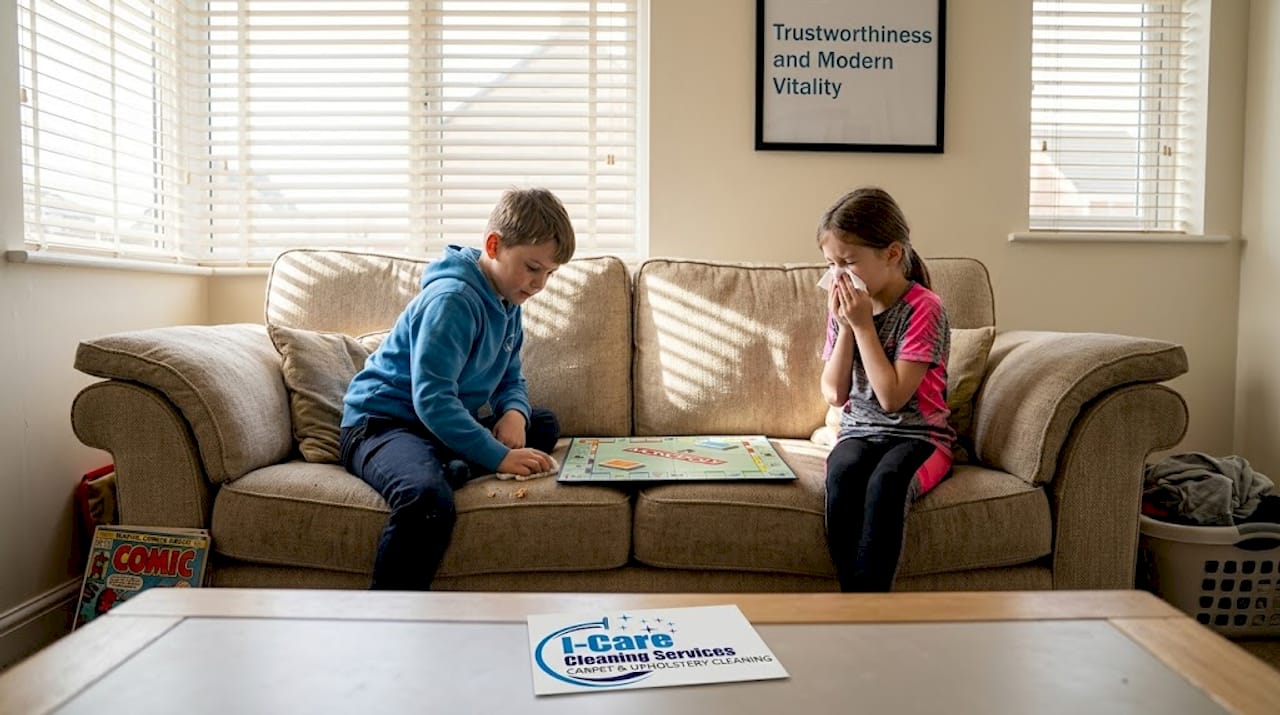
Understanding your risks, it’s worth knowing whether you can handle sofa cleaning yourself or need an expert hand.
Many people try DIY methods first. Supermarket sprays, bicarbonate of soda, and steam mops all have their place. But there’s a clear ceiling to what they can achieve, particularly for embedded stains, odours, and allergens. Here’s a straightforward comparison:
| Factor | DIY cleaning | Professional cleaning |
|---|---|---|
| Effort | High, time-consuming | Low for you, handled by experts |
| Effectiveness | Surface level only | Deep fibre penetration |
| Time taken | Several hours, plus drying | Efficient, faster drying |
| Cost | Low upfront | Moderate, better long-term value |
| Stain removal | Partial, risk of spreading | Targeted, specialist treatment |
| Allergen removal | Minimal | Thorough extraction |
| Fabric safety | Risk of damage if wrong product used | Assessed per fabric type |
Professional cleaning delivers deeper results and improved hygiene that DIY simply can’t replicate, particularly for families with allergies, pets, or young children in the home.
That said, DIY cleaning is perfectly fine for minor, fresh spills and light surface dust. The key is knowing the limits. For anything that’s been sitting in the fabric for more than a day or two, professional extraction is the safer and more effective choice.
If you’re keen on using greener methods at home, there are eco-friendly sofa cleaning approaches that minimise chemical use and protect your fabric between professional visits.
Pro Tip: Before applying any homemade or shop-bought cleaning solution to your sofa, always test it on a small, hidden area first, such as the underside of a cushion. Leave it for ten minutes and check for colour change or fabric damage before proceeding.
When should you call in a professional?
Whether it’s stubborn stains or ongoing health concerns, here’s how to know when expert help is a must.
There are some situations where no amount of home cleaning will get the job done properly. Recognising these moments early saves you money and protects your sofa’s lifespan.
Call in a professional when:
- Odours persist after cleaning. If your sofa still smells after you’ve tried airing and spraying, the source is deep in the fibres or padding and needs extraction.
- Stains have set in. Any stain that has dried and been there for more than 24 to 48 hours has likely bonded with the fabric. Home products rarely lift these fully.
- Allergy symptoms are worsening. Ongoing sneezing, coughing, or skin irritation without an obvious cause often points back to the sofa.
- After illness in the household. Viruses and bacteria can survive on upholstery for extended periods. A professional clean after someone has been seriously ill is a sensible hygiene measure.
- You have pets. Pet dander, urine, and hair require specialist extraction. Standard vacuuming isn’t enough, and pet odours can become permanent if left untreated.
- Moving out of a rented property. A professionally cleaned sofa can help secure your deposit return and meet tenancy agreement standards.
- After a major accident or spill. Large liquid spills, especially anything oily or strongly coloured, need urgent professional treatment before they soak into the foam beneath the fabric.
Recommended frequency: Professional upholstery cleaning is recommended at least once a year for the average household, and every six months for homes with pets, children, or anyone with allergies or asthma.
Booking expert upholstery cleaning on a schedule, rather than waiting for obvious problems, keeps your sofa in better condition and your home genuinely healthier.
Simple upkeep tips to extend your sofa’s freshness
Professionals aren’t always needed. Here’s how quick routines help safeguard your investment and indoor air.
Regular maintenance between professional cleans makes a significant difference. It keeps dirt from embedding deeply and makes each professional clean more effective and longer lasting.
Routine maintenance keeps sofas looking and feeling fresh for longer, and these habits take only a few minutes each week:
- Vacuum weekly. Use your vacuum’s upholstery attachment to go over all surfaces, including under and between cushions. This removes loose debris, pet hair, and dust before it works its way into the fibres.
- Rotate and flip cushions regularly. Rotating cushions every week or two evens out wear, prevents permanent sagging, and stops one area from becoming more soiled than others.
- Treat spills immediately. Blot (never rub) spills with a clean, dry cloth the moment they happen. Rubbing spreads the stain and pushes liquid deeper into the fabric. Speed matters more than product choice in the first few minutes.
- Air your sofa regularly. Open windows and allow fresh air to circulate around your sofa whenever possible. If removable cushion covers can be safely washed, do so every few months according to the care label.
- Keep food and drinks away. This one’s obvious but often ignored. Eating on the sofa consistently is one of the fastest ways to build up bacteria, odours, and staining in the fabric.
Following these upholstery maintenance tips consistently means you’ll need professional cleaning less urgently and your sofa will last significantly longer before showing signs of wear.
Why waiting too long often backfires: a local expert’s take
While the above advice is practical, let’s see what our local upholstery specialists have learnt from experience.
There’s a common assumption in many Glasgow homes that sofas only need cleaning when they look dirty. After 15 years in this industry, we can tell you clearly that this thinking costs people more money in the long run.
We regularly see sofas that could have been restored with a straightforward professional clean, but by the time the owner calls us, the staining has set permanently into the foam beneath the fabric. One customer in Motherwell came to us after years of ignoring a slow-building pet odour. By that point, the smell had penetrated the internal padding entirely, and no surface treatment was going to fix it. The sofa ultimately had to be replaced. A professional clean 18 months earlier would have cost a fraction of buying a new one.
The reality is that delay leads to more difficult and costly cleaning every single time. Fresh stains lift cleanly. Old ones bond with fibres. New odours neutralise easily. Ingrained ones require aggressive treatment that carries a small risk of fabric damage.
We also see this pattern with renters approaching end of tenancy. Sofas that have had no maintenance for two or three years often can’t be restored to a condition that satisfies a landlord’s inspection, leading to deposit disputes that could have been avoided entirely.
Think of professional upholstery cleaning the same way you’d think about servicing your boiler or going to the dentist. You don’t wait until something breaks completely. You go regularly to prevent that from happening. The real value of regular cleaning isn’t just a cleaner sofa today, it’s a sofa that lasts years longer and a home that stays genuinely healthier throughout.
Professional help for spotless sofas in Glasgow
Once you recognise the signs, finding trustworthy professional help is your next easy step.
If your sofa is showing any of the signs above, don’t put it off. At I Care Cleaning Services, we’ve been deep-cleaning sofas, chairs, and all upholstered furniture across Glasgow and the surrounding areas for over 15 years. Our trained technicians use eco-friendly, child-safe and pet-safe products that remove stains, odours, allergens, and bacteria thoroughly, with fast drying times so your home is back to normal quickly.

Whether it’s a single seat or a full three-piece suite, our upholstery cleaning Glasgow service is priced competitively and backed by a 100% satisfaction guarantee. We cover Glasgow, Paisley, East Kilbride, Motherwell, Airdrie, Newton Mearns, Bearsden, and surrounding areas. Explore the advantages of professional cleaning or find out more about our eco-friendly cleaning approaches to decide what’s right for your home. Call us now for a fast, friendly quote.
Frequently asked questions
How often should my sofa be professionally cleaned?
Aim for a professional clean at least once a year, or every six months if you have children, pets, or allergies in the household.
Is it safe to use homemade cleaning solutions on my sofa?
Many homemade solutions are safe, but always patch-test on a hidden area first to check for colour change or fabric damage before applying more widely.
Can dirty sofas impact indoor air quality?
Yes. Unclean sofas trap dust, allergens, and bacteria, and upholstery harbours particles that are released into the air and can worsen allergy and asthma symptoms over time.
Are professional sofa cleans worth the cost?
Absolutely. Professional cleaning delivers deeper results than any home method, removing embedded dirt and allergens that protect both your health and the long-term condition of your furniture.
What’s the difference between upholstery and carpet cleaning?
Upholstery cleaning targets fabric furniture such as sofas and chairs, while carpet cleaning focuses on floor coverings. Both require different specialist tools, techniques, and cleaning solutions to achieve safe and effective results.

