

TL;DR:
- Deep cleaning removes embedded dust mites, bacteria, and mould spores beyond vacuuming’s reach.
- Hot water extraction is the most effective method for allergen and bacteria removal.
- Regular professional deep cleaning improves household health, especially for allergy and pet owners.
Your carpet might look perfectly fine after a regular vacuum. But underneath those fibres, dust mites, pet allergens, bacteria, and mould spores are thriving in conditions your hoover simply cannot touch. Deep cleaning is what actually removes them. This guide explains exactly what deep cleaning involves, which methods work best for carpets and upholstery in Glasgow homes, and why the health benefits go far beyond a fresh appearance. If you have children, pets, or anyone in your household with allergies or asthma, this is essential reading.
Table of Contents
- What does deep cleaning actually involve?
- Comparing deep cleaning methods for carpets and upholstery
- Health benefits of deep cleaning for Glasgow homes
- When, why, and how often to deep clean carpets and upholstery
- Can you deep clean yourself or is a professional service better?
- Why most people misunderstand deep cleaning and what actually works
- Explore professional deep cleaning services for a healthier Glasgow home
- Frequently asked questions
Key Takeaways
| Point | Details |
|---|---|
| Deep cleaning goes beyond surface | It removes embedded dirt, allergens, bacteria, and mould in carpet and upholstery fibres. |
| Hot water extraction is most effective | This method achieves up to 97% allergen removal and is recommended for health-focused households. |
| Regular schedules improve health | Deep cleaning every 6-12 months helps maintain air quality and reduces allergy symptoms. |
| Professional services offer deeper results | DIY methods rarely match the thoroughness and health impact of expert cleaning. |
What does deep cleaning actually involve?
Now that we’ve set the stage, let’s break down exactly what deep cleaning includes.
Deep cleaning is not a more thorough version of vacuuming. It is an entirely different process that penetrates below the surface fibres of carpets and upholstery to remove what ordinary cleaning leaves behind. We’re talking about ingrained dirt that has been pressed down by foot traffic over months, allergens bonded to fibres, bacteria colonising warm and damp areas within the pile, and mould spores that thrive in low-ventilation spaces common across Scottish homes.
The most thorough method available is hot water extraction (HWE), sometimes called steam cleaning. This process injects heated water and a cleaning solution deep into carpet or upholstery fibres, then extracts it at high pressure along with everything it has loosened. The results are dramatic. Research shows that HWE removes up to 97% of allergens from carpets, including 91% of dust mite allergens, 95% of cat allergens, and 97% of dog allergens, with airborne cat allergen levels dropping by 67%, bacteria by 90%, and mould by 55%.
Other methods include:
- Dry cleaning uses chemical compounds or powder applied to carpet fibres and vacuumed away. It is gentler on delicate fibres and quicker to dry, but it does not achieve the same depth of clean.
- Bonnet or shampoo cleaning scrubs the surface with a rotating pad and soapy solution. Useful for a quick visual refresh, but largely surface-level and ineffective against deeply embedded allergens.
- Low-moisture methods offer a middle ground, faster drying with moderate allergen removal, making them a reasonable option for some upholstery types and rental properties.
Pro Tip: Even if your carpet looks clean and has no visible stains, allergens and bacteria remain deep in the pile. A professional deep clean at least once a year is the only way to properly remove them.
Understanding the deep carpet cleaning benefits makes it far easier to choose the right approach. And if you have ever wondered why carpet cleaning improves health, the answer lies entirely in what gets removed at this deeper level.
Comparing deep cleaning methods for carpets and upholstery
Once you understand what deep cleaning is, it’s crucial to know the methods available and their strengths.
Different methods suit different situations. A busy family home with wall-to-wall carpet and two dogs has very different needs from a rented flat that needs a quick, low-disruption clean before new tenants arrive. Here is a clear breakdown:
| Method | Drying time | Allergen removal | Best for |
|---|---|---|---|
| Hot water extraction (HWE) | 2 to 6 hours | Excellent (up to 97%) | Allergy sufferers, pets, high-traffic areas |
| Dry / low-moisture | 30 to 60 minutes | Moderate | Delicate fibres, fast turnaround, rentals |
| Bonnet / shampoo | 1 to 2 hours | Low (surface only) | Quick visual refresh |
According to industry guidance on carpet cleaning methods, professionals consistently recommend HWE for homes where health is a priority, particularly in high-traffic or allergy-affected households, while low-moisture options are better suited to rentals needing a fast turnaround.
Here is how to approach the decision:
- Assess your health needs first. If anyone in your household has asthma, hay fever, or a pet allergy, HWE is the clear choice.
- Consider your carpet or upholstery type. Some wool carpets and certain sofa fabrics are not suited to HWE. A professional will always assess this before starting.
- Factor in drying time. If you cannot vacate a room for several hours, a low-moisture method may be a practical compromise.
- Think about how heavily used the area is. High-traffic hallways and living room carpets accumulate far more allergens and bacteria than rarely used guest rooms.
“For homes where health matters most, hot water extraction is the gold standard. It is the only method that consistently removes allergens at a clinically meaningful level.”
Understanding the difference between self-cleaning and professional cleaning helps clarify why most DIY attempts fall short. And for sofas, armchairs, and other soft furnishings, the upholstery cleaning advantages extend well beyond aesthetics.
Health benefits of deep cleaning for Glasgow homes
After choosing the right method, it is the health pay-offs that count most. Here is what the science shows.
Glasgow’s climate matters here. Cool, damp conditions throughout much of the year create an environment where dust mites and mould spores thrive indoors. Carpets and upholstery act as reservoirs, collecting allergens over time and releasing them back into the air as people walk, sit, and move around the home.
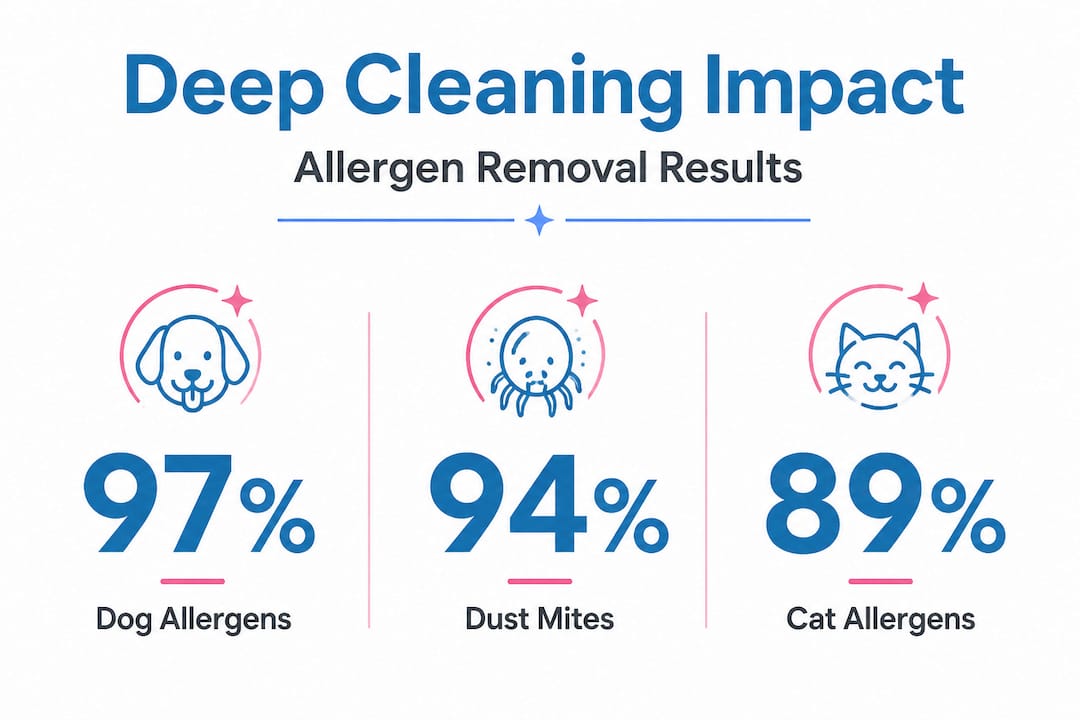
The health data for HWE is striking:
| Allergen / contaminant | Reduction from carpets | Reduction from upholstery |
|---|---|---|
| Dust mite allergen (Derp1/Derf1) | 91% | 83% |
| Cat allergen (Feld1) | 95% | 96% |
| Dog allergen (Canf1) | 97% | 94% |
| Bacteria | 90% | Not specified |
| Mould | 55% | Not specified |
These are not minor improvements. These figures from published allergen research represent genuinely significant reductions that can change the day-to-day health of people living with allergies or asthma.
The households that benefit most from regular deep cleaning include:
- Families with young children, who spend large amounts of time on the floor and are more vulnerable to airborne allergens and bacteria.
- Pet owners, whose dogs and cats shed allergens constantly onto carpets and sofas, even when the animal appears clean.
- People with asthma or hay fever, who can experience symptom flares directly linked to elevated indoor allergen levels.
- Anyone recovering from illness, where a clean indoor environment supports recovery and reduces re-exposure to bacteria or mould.
97% of dog allergens removed. That single figure tells you more about the power of professional deep cleaning than any marketing claim.
If you want to take this further, our guide on allergy-proof carpets covers how to maintain low allergen levels between professional cleans. And if you are still weighing whether it is worth the investment, the full breakdown of carpet cleaning benefits for Glasgow homes makes the case clearly.
When, why, and how often to deep clean carpets and upholstery
With health in mind, timing your deep cleaning is essential for upkeep and long-term benefits.
Most households need a professional deep clean every six to twelve months. But that is a general starting point. Frequency depends heavily on how the home is used, who lives in it, and what is being tracked across those carpets daily.
Here is a practical guide based on household type:
- Standard adult household (no pets, no allergies): Once per year is typically sufficient for carpets. Upholstery can be cleaned every 12 to 18 months.
- Households with pets: Every six months is advisable. Pet dander, hair, and oils accumulate quickly in carpet fibres and sofa fabric, and odour builds up faster than most owners realise.
- Allergy or asthma households: Every four to six months for high-use rooms. Keeping allergen levels consistently low is more effective than occasional intensive cleaning.
- Homes with young children or crawling infants: Every six months, as children are in direct contact with carpet surfaces and are more susceptible to bacteria and allergens.
- End of tenancy or post-renovation: An immediate deep clean is essential before new occupants move in, or once building dust has settled after work is completed.
Key signs that your carpets or upholstery need a deep clean right now:
- Persistent musty or pet odour that does not clear with vacuuming or airing the room.
- Visible discolouration or greying in high-traffic areas, even after hoovering.
- Allergy symptoms indoors that seem worse than usual.
- Stains that have been treated on the surface but remain visible.
- A general dullness or flatness to the carpet pile.
Pro Tip: Book your deep clean at the start of autumn, before windows close for winter and ventilation drops. Allergen levels tend to spike in the colder months when homes are sealed up, making late-summer or early-autumn cleaning the smartest timing.
Professionals consistently recommend HWE for high-traffic and allergy homes precisely because the build-up in these environments demands the deepest clean available. Checking the signs your carpet needs cleaning helps you stay ahead of the problem rather than reacting to it.
Can you deep clean yourself or is a professional service better?
Finally, the choice between DIY and professional deep cleaning shapes your results significantly.
There are domestic carpet cleaning machines available to hire from supermarkets and hardware shops across Glasgow. They are affordable and convenient, and for a light freshen-up they have their place. But for genuine deep cleaning with meaningful allergen and bacteria removal, they fall well short of professional-grade equipment.
Here is why:
- Water pressure and temperature matter enormously. Professional HWE machines operate at far higher pressure and temperature than domestic hire units. Lower pressure means less penetration, and lower temperature means less effectiveness against bacteria and mould.
- Extraction power is the critical difference. Removing the dirty water is just as important as injecting the clean solution. Professional machines extract at a level that domestic units simply cannot match, which also means faster drying times and less risk of over-wetting, which can itself cause mould.
- Product knowledge is underestimated. Professional technicians select solutions appropriate to your specific carpet type, fibre content, and the nature of any staining. Using the wrong product on certain fibres can cause shrinkage, discolouration, or damage to the pile structure.
- Hidden risks of DIY. Over-wetting a carpet and failing to extract properly can lead to mould growth beneath the underlay, which is far costlier to deal with than a professional clean would have been.
Pro Tip: If you are renting and need an end-of-tenancy clean that will satisfy a landlord or letting agent, a professional clean with a receipt is almost always required. DIY efforts rarely meet the standard needed to protect your deposit.
Professionals recommend HWE for allergy homes for good reason. When health is involved, a hire machine is not a like-for-like substitute. The detailed comparison on DIY versus professional cleaning gives a full picture of where DIY is reasonable and where it genuinely falls short.
Why most people misunderstand deep cleaning and what actually works
Having explored all the evidence, it is worth sharing what experience really reveals about deep cleaning in practice.
Most people approach carpet and upholstery cleaning reactively. A visible stain appears, they treat the surface, and the problem appears solved. Or they vacuum weekly and feel satisfied the home is clean. Both responses are understandable, but both miss the point entirely.
The truth is that the most damaging contaminants in your carpets are invisible. Dust mite allergens, cat and dog dander, and bacteria do not announce themselves with a stain or an obvious smell. They accumulate silently over months, and by the time symptoms appear in an allergy sufferer or the carpet develops an ingrained odour, the build-up is already substantial.
There is also a persistent belief that deep cleaning is something you only need for very dirty homes. That is genuinely backwards. Regular, preventative deep cleaning is what keeps a home consistently healthy. Waiting until the carpet looks visibly dirty means you have already allowed allergen levels to climb far higher than they need to be.
The shortcuts rarely work either. Surface sprays, deodorisers, and hire machines all have their uses, but they address symptoms rather than causes. The only proven method for achieving clinically meaningful allergen removal is professional HWE carried out with properly maintained, high-specification equipment.
For upholstery cleaning expert advice specifically, the same principle applies. Your sofa collects the same allergens as your carpet, but it is also where your family spends hours every evening. It deserves the same standard of care.
The smartest approach combines a regular professional deep clean schedule with sensible daily habits: vacuuming frequently, ventilating well, and acting quickly on spills rather than leaving them to set. That combination consistently delivers the best long-term results.
Explore professional deep cleaning services for a healthier Glasgow home
If you are ready for a healthier home, professional services in Glasgow and nearby areas make deep cleaning straightforward.
I Care Cleaning Services brings over 15 years of experience to carpet and upholstery cleaning across Glasgow and surrounding areas. We use professional-grade hot water extraction equipment and eco-friendly, child and pet-safe solutions to deliver a genuinely deep clean. Not a surface refresh. A real, measurable difference.

Book upholstery cleaning in Glasgow for sofas, armchairs, and soft furnishings, or arrange carpet cleaning in Airdrie and across our full service area. We serve Glasgow, Paisley, East Kilbride, Motherwell, Airdrie, Newton Mearns, Bearsden, and more. Competitive pricing. Trained, insured technicians. 100% satisfaction guarantee. Call now to book your clean.
Frequently asked questions
Is deep cleaning necessary if I vacuum weekly?
Regular vacuuming helps maintain surface cleanliness, but it cannot remove deeply embedded allergens, bacteria, and mould. HWE removes up to 97% of allergens that vacuums simply cannot reach.
How long does it take for carpets to dry after deep cleaning?
Hot water extraction typically takes 2 to 6 hours to dry, depending on ventilation and carpet type. Dry and low-moisture methods dry considerably faster, usually within 30 to 60 minutes.
Can deep cleaning help with pet allergies?
Yes. Professional HWE removes up to 97% of dog and cat allergens from carpets, making it one of the most effective steps a pet-owning household can take to reduce allergy symptoms indoors.
Is professional deep cleaning worth the cost compared to DIY?
Professional deep cleaning delivers a level of allergen and microbe removal that domestic hire machines cannot match. Professionals recommend HWE particularly for allergy households, homes with pets, and high-traffic areas where health is a genuine concern.
Recommended
- How carpet cleaning improves health and indoor air quality
- Deep carpet cleaning explained: benefits, methods and expert advice
- Carpet cleaning terms explained: make smarter choices
- Clear signs your carpet needs cleaning for a healthier home
- Carpet Cleaning Benefits: A Healthier, Greener Home – Nu-England Services


