

TL;DR:
- Most stains in a Glasgow home can be effectively removed using eco-friendly methods like blotting, rinsing, and gentle cleaning solutions. Proper technique, including timely action and thorough residue removal, is more important than the specific products used. When stains persist or fabrics are delicate, professional cleaning offers the safest and most reliable solution.
A spilled glass of red wine on a cream carpet. A muddy paw print ground into the sofa. A child’s felt-tip masterpiece decorating the rug. These are not rare disasters — they are Tuesday in a Glasgow home. The trouble is, most people either reach for harsh chemicals that damage fibres and pose risks to children and pets, or they scrub frantically and make things worse. There is a better way. This guide walks you through practical, low-toxicity stain removal techniques for carpets, upholstery, and textiles that actually work — protecting your home, your family, and the environment at the same time.
Table of Contents
- The essentials: Tools, products, and preparation
- Step-by-step eco stain removal for carpets
- Upholstery and textile stain removal: Fabric-specific strategies
- Troubleshooting tough stains and when to call the experts
- What most stain removal guides miss: The overlooked power of proper mechanics
- Keep your Glasgow home spotless the easy way
- Frequently asked questions
Key Takeaways
| Point | Details |
|---|---|
| Blot, never rub | Immediate blotting and gentle cleaning reduce stain setting and fabric damage. |
| Eco-friendly wins | Safe solutions like vinegar and enzyme cleaners are effective yet gentle on your home and health. |
| Technique is crucial | Proper application, patience, and complete drying matter more than just product choice. |
| Know fabric codes | Checking upholstery labels prevents accidental damage and ensures correct stain treatment. |
| When to call experts | Persistent or tricky stains are best left to professional cleaners with the right tools and knowledge. |
The essentials: Tools, products, and preparation
Having set the scene for the kinds of stains you will tackle, you need to assemble the right materials and understand the crucial pre-cleaning steps before touching a single stain.
The good news is that an effective, eco-friendly cleaning kit does not cost much. You likely have most of these items already:
- Microfibre cloths — They lift and trap particles without pushing them deeper into fibres. Far more effective than standard kitchen roll.
- White vinegar — A mild acid that breaks down alkaline stains like pet urine and food spills. Safe, biodegradable, and cheap.
- Clear dish soap — A gentle surfactant that cuts through grease. Choose a plant-based variety for the most eco-conscious option.
- Enzyme cleaner — Specifically formulated to break down proteins in food, blood, and pet waste. Bacteria-based, not chemical-based.
- Spray bottles — For controlled application. Over-saturating a stain is one of the most common mistakes people make.
- Rubber gloves — Even with gentle products, protecting your hands is sensible practice.
Preparation is everything. Before you apply anything to a stain, vacuum the area thoroughly to remove loose debris. Rubbing a dry crumb into a damp solution creates a bigger mess. Always read the care code on your carpet or upholstery — these small symbols tell you whether the fabric can handle water-based cleaning, solvent-only treatment, or professional attention only.
| Feature | Eco-friendly products | Traditional chemical products |
|---|---|---|
| Safety for children and pets | High | Low to moderate |
| Environmental impact | Minimal | Significant |
| Effectiveness on light stains | Excellent | Excellent |
| Effectiveness on heavy stains | Good with correct technique | Good, risk of damage |
| Cost | Low | Low to moderate |
| Fabric risk | Low | Moderate to high |
As Consumer Reports confirms, the safest first step for carpets and upholstery is blotting and pre-testing in a hidden spot. Do not skip this step. Our own carpet stain removal guide walks through this in more detail if you want extra reassurance.
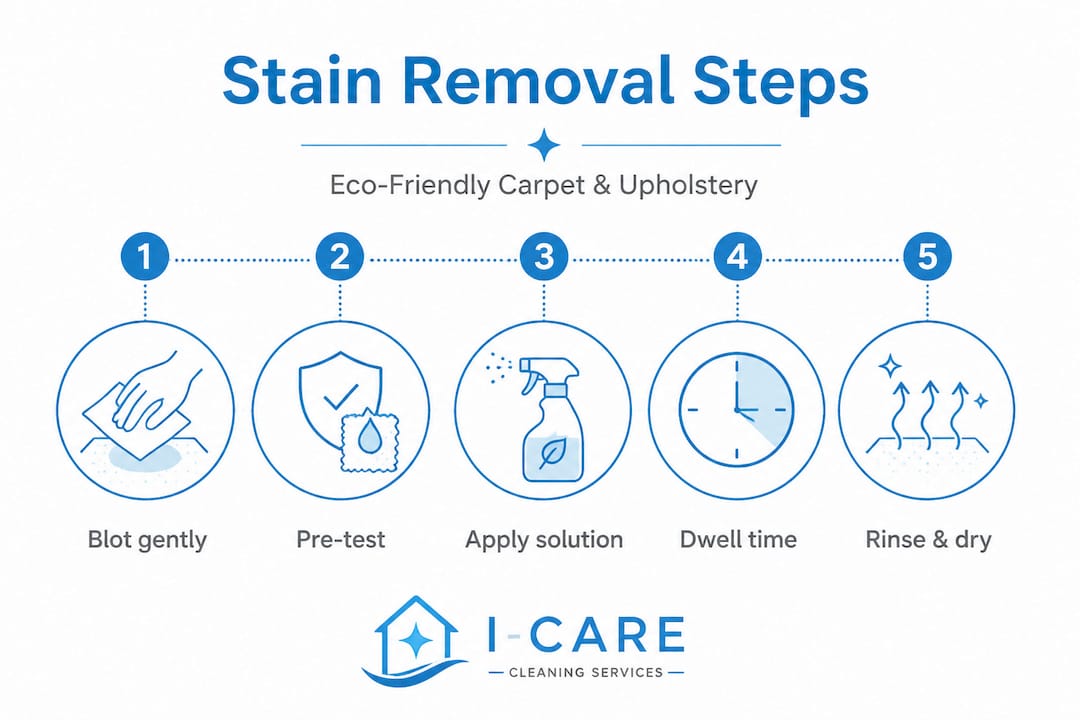
Pro Tip: Always blot, never rub. Rubbing pushes the stain deeper into the pile and spreads it outward. Use a clean, white microfibre cloth and press firmly down, then lift.
Step-by-step eco stain removal for carpets
Now that you have prepped your space and supplies, it is time to tackle carpet stains using the right process for reliable results.
Speed matters. The longer a stain sits, the more it bonds to carpet fibres. Act within the first few minutes wherever possible. Here is the process that works:
- Blot immediately. Use a dry microfibre cloth to absorb as much of the spill as possible. Work from the outside edge inward to stop the stain spreading.
- Vacuum any dry debris. If the stain has a solid component — food, mud, pet mess — let it dry slightly if wet, then vacuum before applying liquid.
- Mix your cleaning solution. A simple, effective DIY recipe: one teaspoon of clear dish soap mixed with one tablespoon of white vinegar in 250ml of warm water. This dish soap and vinegar mix is a well-known eco-friendlier approach — apply by blotting, leave briefly, then blot again.
- Apply sparingly. Spray a small amount onto the stain. Do not pour directly. You want the surface damp, not wet.
- Allow dwell time. Leave the solution to work for two to three minutes. This is where most people lose patience and rush, which reduces effectiveness.
- Blot again. Use a fresh, clean section of cloth each time. Repeat until no more colour transfers to the cloth.
- Rinse with plain water. Blot with a cloth dampened with clean water to remove any soap residue.
- Dry thoroughly. Place a dry towel over the area and press down. Leave a fan or open window to encourage airflow. Never allow carpet to remain damp.
For food stains, pet accidents, or anything protein-based, swap the vinegar solution for an enzyme cleaner. Enzyme-based cleaners are specifically recommended for protein-based stains like urine, blood, and food — the biological agents literally consume the stain-causing molecules rather than just masking them. Apply according to the product instructions, allow the recommended dwell time, and blot clean.
| Stain type | Recommended approach |
|---|---|
| Red wine, juice | Dish soap and vinegar solution |
| Pet urine | Enzyme cleaner |
| Mud | Dry first, vacuum, then dish soap mix |
| Grease or oil | Small amount of dish soap only, blot carefully |
| Blood | Cold water only first, then enzyme cleaner |
| Coffee or tea | Dish soap and vinegar solution |
| Ink | Consult a professional |
| Heavy dye transfer | Consult a professional |
Knowing how to identify and treat carpet stains by type makes a real difference to your success rate. Understanding why stains matter for your carpet’s lifespan is just as important as knowing how to treat them.
Always test in a hidden area and avoid over-saturating the carpet. Excess moisture leads to mould beneath the pile and fibre distortion — problems that are far more costly to fix than the original stain.
Pro Tip: Correct dwell time is critical. Two to three minutes is enough for most solutions. Leaving a cleaner on too long can bleach fibres or leave a sticky residue that attracts more dirt.
Upholstery and textile stain removal: Fabric-specific strategies
Carpet cleaning is just part of the picture — delicate upholstery and textiles need different, fabric-aware approaches to avoid causing damage.
The single most important step before treating any upholstery stain is checking the care label. Fabric care codes tell you exactly what is safe:
- W — Water-based cleaning solutions are safe.
- S — Solvent-based cleaners only. No water.
- W/S — Either method is safe.
- X — Professional cleaning only. No DIY treatment.
Ignoring these codes is the fastest way to ruin an expensive sofa. As textile manufacturers make clear, treating stains promptly while avoiding heat, bleach, and the wrong cleaner type is essential for protecting fabric integrity.
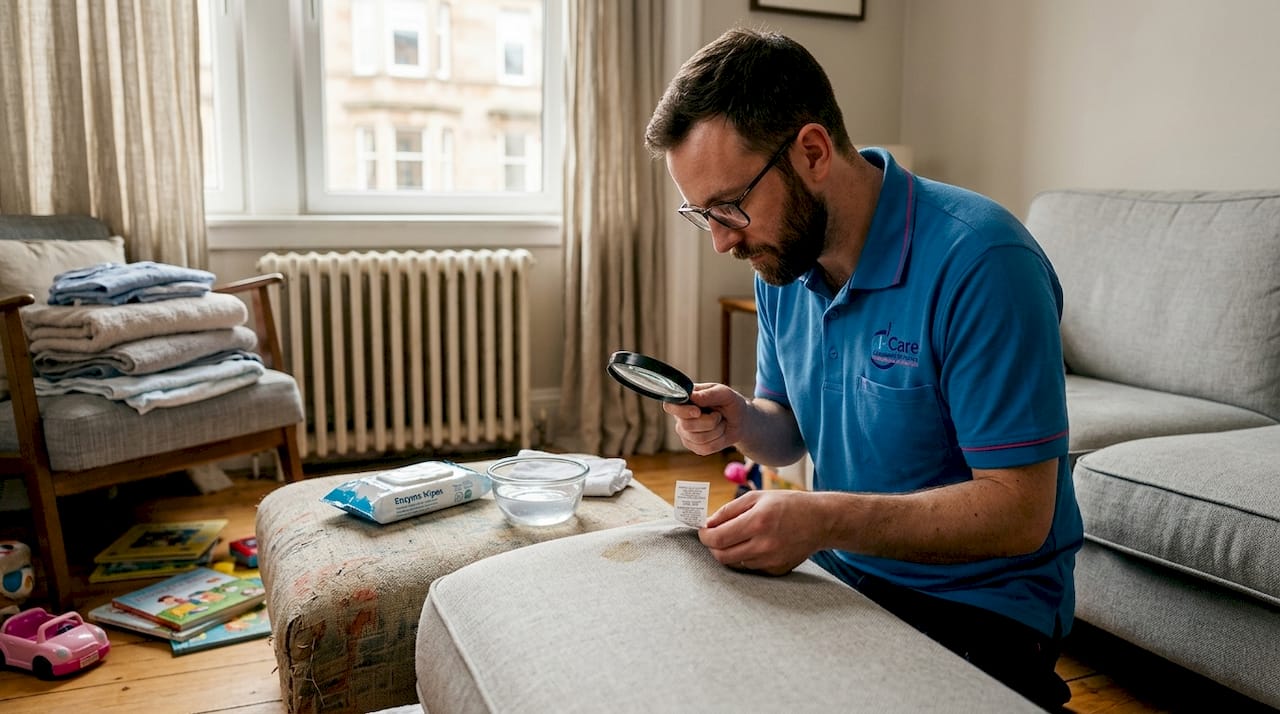
For water-based stains on a W-coded fabric, blot immediately with a clean cloth, then apply a very small amount of your dish soap solution. Work gently from the outside in. For oil-based stains, use a tiny drop of pure dish soap without water first to lift the grease, then address any residue with your vinegar solution.
Common mistakes to avoid:
- Using heat — A hair dryer or iron will set many stains permanently into the fabric.
- Over-wetting — Too much liquid can soak into the padding beneath, causing mould and odour. This is one of the most common and costly mistakes.
- Using bleach — Even on white fabrics, bleach can weaken fibres and create uneven patches.
- Rubbing vigorously — This distorts the weave and spreads the stain outward.
- Skipping pre-testing — Different dye lots react differently to cleaning agents.
Follow the care label and avoid bleach entirely. One heavy application of the wrong product can cause permanent fabric damage that no professional can fully reverse.
Several light applications are always safer than one heavy treatment. Each gentle pass removes a little more of the stain without pushing solution deeper into the padding. Our guide on eco-friendly upholstery tips gives fabric-specific advice for the most common sofa and chair materials.
Pro Tip: After treating upholstery, always allow it to dry completely before sitting on it or replacing cushions. Residual moisture trapped under cushions creates the ideal conditions for mould. Open windows and keep air circulating.
Troubleshooting tough stains and when to call the experts
Even with the right methods, some stains prove stubborn. Here is what to do when your first attempts do not succeed.
The most frustrating outcome is a stain that appears to vanish while wet but reappears as the carpet dries. This is called wicking. It happens when a stain has soaked deep into the carpet backing — the surface looks clean, but the stain migrates back up through the pile as moisture evaporates. The solution is thorough rinsing and complete drying, not more cleaning product.
Another common problem is re-soiling. Residue left behind after cleaning actively attracts soil over time, leaving a dark patch exactly where the stain was. This is why rinsing with plain water after any cleaning solution is not optional — it is essential.
Signs that a stain needs professional attention:
- The stain persists after two or three careful DIY attempts.
- There is a persistent odour that cleaning has not removed.
- The affected area is large — bigger than a dinner plate.
- The fabric or carpet is delicate, antique, or has a care code indicating professional-only treatment.
- The stain involves a substance you cannot identify.
- The carpet or upholstery shows signs of damage from previous cleaning attempts.
The temptation when facing a stubborn stain is to try something stronger. Resist it. Harsh chemicals applied in frustration cause fibre damage, colour loss, and chemical residue that makes future cleaning harder. The comparison between professional versus DIY cleaning is worth understanding before you make that call.
Professional cleaners use industrial-grade extraction equipment that removes both the stain and the cleaning solution together, eliminating residue entirely. They also understand how to treat specific fibre types safely. Our carpet cleaning tips and tricks page bridges the gap between DIY and professional results, and the benefits of professional carpet cleaning speak for themselves when it comes to valuable or heavily used flooring.
Pro Tip: Before reaching for bleach or a stronger product, call a local cleaner for advice. Many will give a quick answer over the phone and help you avoid making the stain worse. It costs nothing to ask.
What most stain removal guides miss: The overlooked power of proper mechanics
Here is the honest truth after 15 years of cleaning carpets and upholstery across Glasgow: the product you use matters far less than how you use it. Most guides spend pages comparing cleaning sprays and ignore the fundamentals that actually determine whether a stain comes out.
Blotting instead of rubbing. Correct dwell time. Rinsing out residue. Drying completely. These are not tips — they are the entire technique. Get the mechanics right and even basic dish soap performs brilliantly. Get them wrong and professional-grade products will still leave you disappointed.
We see this repeatedly. A homeowner has tried three different products on a wine stain. Each one failed. But when we ask whether they rinsed after each attempt, the answer is nearly always no. The stain was not the problem. The residue from the failed attempts was the problem, acting as a barrier and a soil magnet.
The fixation on finding the “right product” is understandable but misplaced. As Consumer Reports notes, eco-friendlier results come from correct application — blotting, correct dwell time, and complete residue removal — not from the label on the bottle. Less product, more patience, more thorough rinsing.
Manufacturer care codes are another under-valued step. Most people glance at a label and assume it only matters for machine washing. But those codes exist precisely because fabric manufacturers know how their materials react to different cleaning agents. Following them is not cautious — it is simply the correct approach.
The lesson is simple: repeat, gentle treatment wins every time over drastic action.
Mechanics matter most. The right technique with a basic solution will outperform the wrong technique with an expensive product every single time.
Keep your Glasgow home spotless the easy way
For some stains and some homes, expert assistance is the easiest path to a fresh, clean space.
DIY methods work well for everyday spills and prompt action. But when stains are set in, odours persist, or you simply want guaranteed results without the guesswork, professional help is the smarter choice.

At I Care Cleaning Services, we serve homeowners across Glasgow, Airdrie, and the surrounding areas with eco-friendly carpet and upholstery cleaning that is safe for children, pets, and the planet. Our trained, insured technicians handle everything from stubborn carpet stains to delicate sofa fabrics. Whether you need carpet cleaning in Airdrie, upholstery cleaning in Glasgow, or want to understand the full deep cleaning benefits for your home, we are ready to help. Call us today for a fast, friendly quote.
Frequently asked questions
What is the safest first step for removing a stain from my sofa or carpet?
Blot the stain gently — never rub — and always pre-test any cleaning product in a hidden spot before applying it to the visible area.
What should I do if a carpet stain keeps coming back after cleaning?
Persistent re-staining is usually caused by cleaning solution residue left in the fibres — residue attracts soil over time, so rinse thoroughly with plain water and ensure the carpet dries fully.
Are enzyme cleaners safe for all stains?
Enzyme-based cleaners work best for protein-based stains like food, blood, and urine, but always check the product instructions and your fabric care code before applying.
Can I use the same stain removal method for all upholstery fabrics?
No — fabric care codes vary significantly, and using the wrong chemistry can cause permanent damage, so always follow the manufacturer’s care label before treating any upholstery stain.


