TL;DR:
- Proper identification of fabric type and cleaning code is essential to avoid damage.
- Eco-friendly products like vinegar and bicarbonate effectively clean most upholstery safely.
- Regular maintenance and prompt stain treatment extend furniture lifespan and prevent deep-set stains.
The dog has just leapt off the sofa leaving a muddy trail, or your toddler has upended a bowl of bolognese onto your favourite armchair. Sound familiar? Most Glasgow households face moments like these more often than they’d like. The good news is that you don’t need harsh chemicals or an emergency call-out to sort most upholstery stains. With the right knowledge, a few eco-friendly products, and a calm approach, you can tackle the majority of spills and smells yourself. This guide walks you through everything, from identifying your fabric type to maintaining spotless furniture long-term.
Table of Contents
- Understanding your upholstery and cleaning codes
- Eco-friendly tools and products for upholstery cleaning
- Step-by-step: how to clean upholstery safely
- Common upholstery cleaning mistakes and how to avoid them
- Verifying your results and maintaining your upholstery
- What most guides miss about upholstery cleaning
- Get professional upholstery cleaning in Glasgow
- Frequently asked questions
Key Takeaways
| Point | Details |
|---|---|
| Check fabric codes | Always identify your fabric and its cleaning code before using any solution or water on your upholstery. |
| Act quickly on stains | The sooner you address a spill, the less likely it will become a permanent mark, especially from pets or children. |
| Vacuum regularly | Weekly vacuuming of upholstery prevents dirt build-up and addresses most causes of stubborn stains. |
| Use eco-friendly products | Homemade or certified solutions clean safely and protect your family’s health and the environment. |
| Seek help when needed | Don’t hesitate to call professionals for delicate material, deep stains, or when DIY methods aren’t enough. |
Understanding your upholstery and cleaning codes
Before you reach for any cleaning product, you need to know what you’re working with. Upholstery fabrics vary enormously, and what works brilliantly on a polyester blend could permanently damage a delicate linen or velvet. Getting this wrong isn’t just frustrating; it can void your furniture warranty or leave you with a bleached patch that’s worse than the original stain.
Common fabric types include cotton, which is breathable but prone to shrinking when wet; synthetics such as polyester and microfibre, which tend to be more forgiving; leather and faux leather, which need specialist products; and wool or linen blends, which are sensitive to moisture and heat. Knowing your fabric is the first step toward safe, effective cleaning.
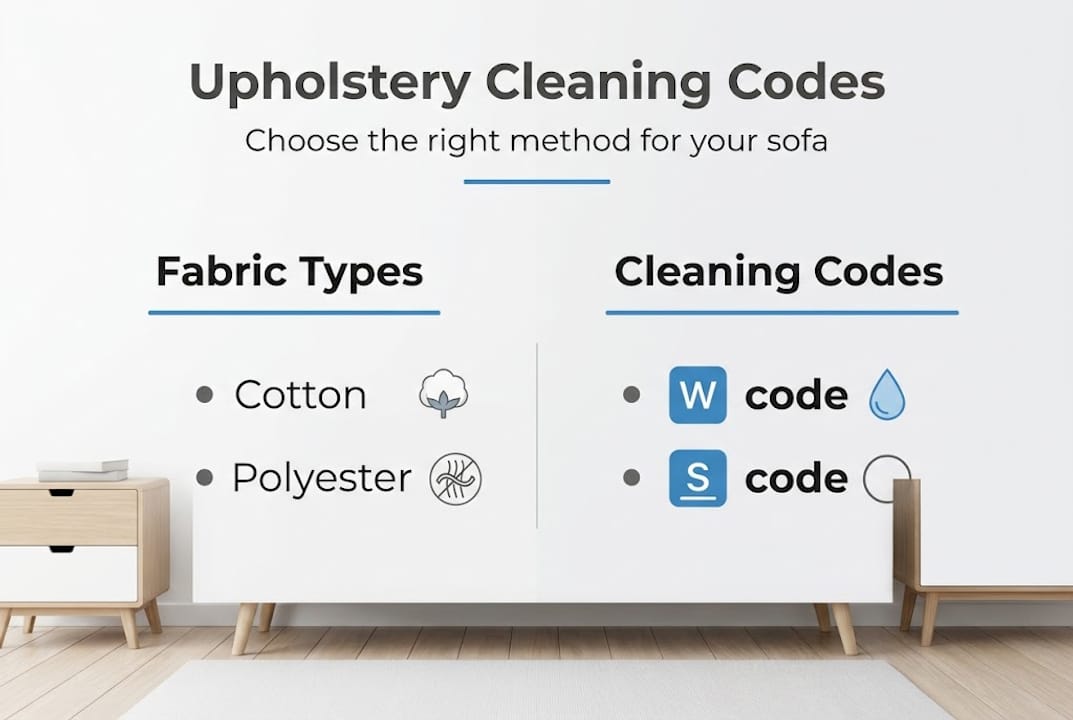
Most sofas and chairs carry a small cleaning code label, usually tucked under a cushion or on the frame. Here’s what those codes mean:
| Code | Meaning | Recommended method |
|---|---|---|
| W | Water-based cleaners only | Mild soap and water solution |
| S | Solvent-based cleaners only | Dry-cleaning solvent; no water |
| WS | Either water or solvent | Flexible; test first |
| X | Vacuum only | No liquid cleaners at all |
Using the wrong method for your code is one of the most common mistakes homeowners make. A “W” fabric cleaned with solvent can leave permanent rings. An “X” fabric dampened with water can shrink or warp.
Regular maintenance also matters more than most people realise. Vacuuming weekly with an upholstery attachment, focusing on crevices, removes dust, pet hair, and crumbs before they embed and prevents 73% of emergency stains according to customer data. If you’re ever unsure about your fabric type or code, upholstery cleaning in Glasgow specialists can assess and advise before any damage is done. Our fabric cleaning experts can also identify hidden codes on older or imported furniture where labels have worn away.
Eco-friendly tools and products for upholstery cleaning
Once you know your upholstery type and cleaning code, it’s time to gather the right, safe tools and materials. The good news is that most eco-friendly cleaning supplies are already in your kitchen cupboard.
Here’s what you’ll need:
- Vacuum cleaner with an upholstery attachment
- Microfibre cloths (at least two or three)
- A clean spray bottle
- White vinegar (distilled)
- Bicarbonate of soda
- Gentle, plant-based washing-up liquid or eco detergent
- A soft-bristled brush
- Two small buckets
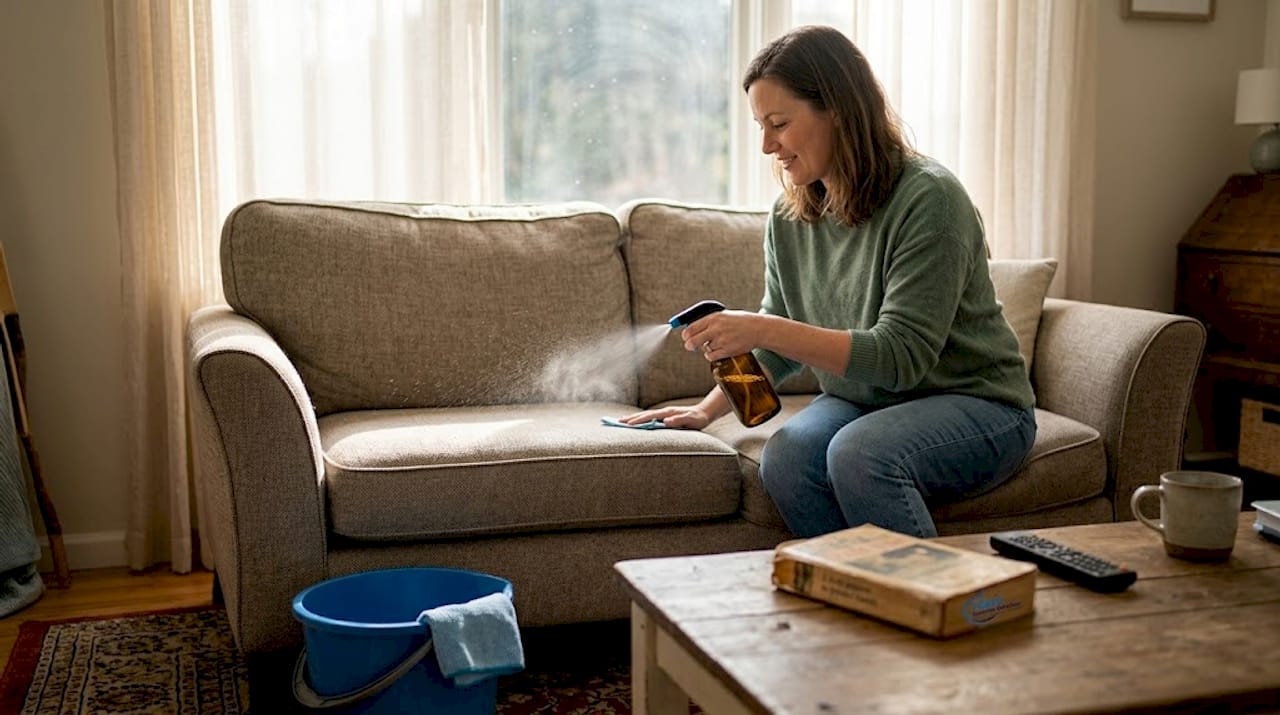
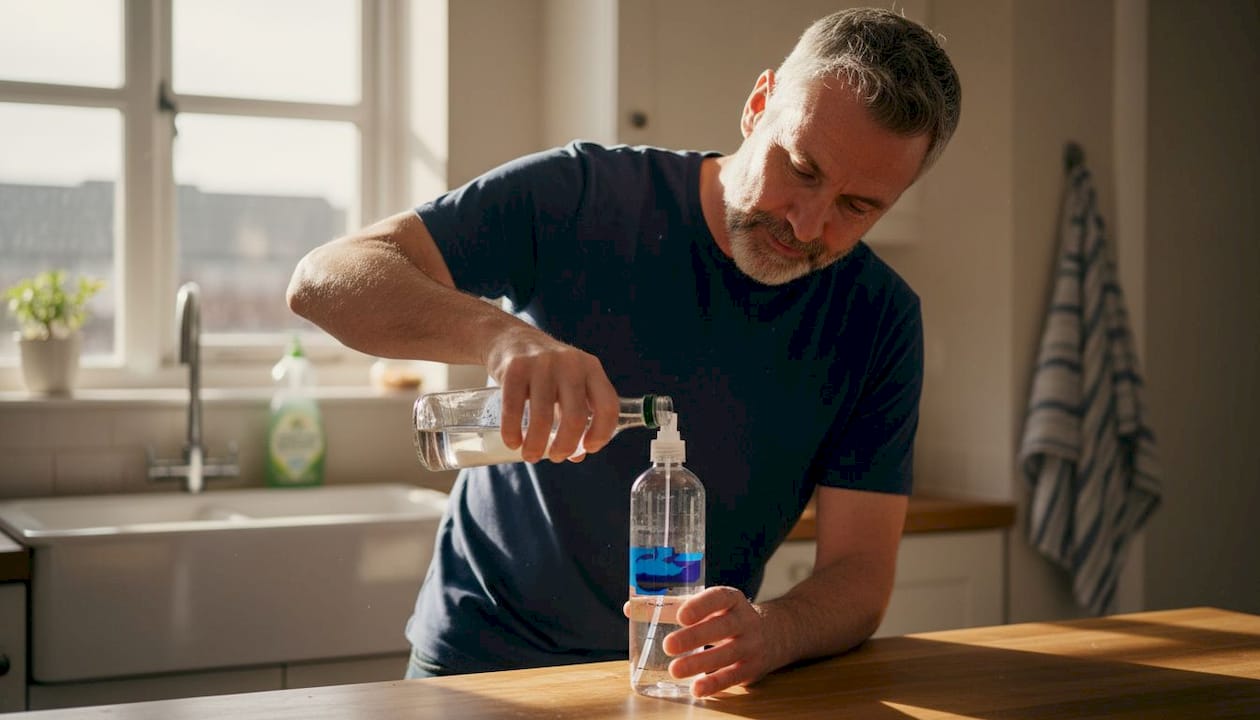
For a simple homemade cleaning spray, mix one part white vinegar with two parts cold water and a few drops of eco washing-up liquid. This works well on most “W” and “WS” coded fabrics and is completely safe around children and pets.
| Option | Pros | Cons |
|---|---|---|
| Homemade vinegar spray | Cheap, non-toxic, pet-safe | Mild odour until dry |
| Eco commercial cleaner | Consistent formula, targeted | Costs more, check ingredients |
| Bicarbonate of soda paste | Great for odours and light stains | Can leave residue if not rinsed |
Products to avoid include anything containing bleach, artificial fragrances, or harsh solvents. These can discolour fabric, irritate skin, and leave chemical residues that are unsafe for children and pets. Even some popular branded fabric sprays contain compounds that linger long after the scent fades.
For ongoing maintenance, our DIY cleaning tips cover a wider range of surfaces and situations beyond upholstery alone.
Pro Tip: Always patch test any solution, homemade or commercial, on a hidden area of the fabric first. Wait ten minutes and check for colour change, shrinkage, or texture damage before applying it to the visible surface.
Step-by-step: how to clean upholstery safely
With supplies at the ready, you’re prepared to clean. Follow these steps carefully for the best results, especially when dealing with pet or children’s stains.
- Vacuum thoroughly first. Remove all cushions and vacuum the entire sofa, including crevices, underneath cushions, and along seams. This lifts loose debris so it doesn’t turn into muddy smears when wet.
- Blot fresh stains immediately. Use a clean, dry microfibre cloth and blot from the outside of the stain inward. Never rub. Acting within minutes reduces stain penetration by 80%, so speed genuinely matters here.
- Apply your eco cleaning solution. Lightly mist the stained area with your spray. Less is more. You want the fabric damp, not soaking.
- Work gently with a soft cloth. Using small circular motions, work the solution into the stain. Then blot again with a clean, dry cloth to lift the residue.
- Rinse with plain cold water. Lightly mist the area with clean water and blot dry. This removes any soap residue that could attract more dirt.
- Allow to air dry fully. Keep windows open or use a fan. Never use a hairdryer on high heat as it can set stains and damage fibres.
For pet and children’s stains specifically, sprinkle bicarbonate of soda over the damp area after cleaning, leave for 15 minutes, then vacuum away. This neutralises odours at the source rather than just masking them.
For more urgent situations, our guidance on emergency spill response gives you a fast-action framework. When stains are older or deeply set, deep cleaning solutions from a professional may be the more reliable route.
Pro Tip: Tackle stains immediately. A stain that’s been sitting for 30 minutes is significantly harder to remove than one you address in the first two minutes.
Common upholstery cleaning mistakes and how to avoid them
Now that you know how to clean upholstery, it’s vital to avoid errors that could reverse your hard work. Some of the most damaging mistakes are also the most common.
- Over-wetting the fabric. Too much liquid leads to slow drying, which creates the perfect conditions for mould and mildew inside the cushion foam. This is especially risky in Glasgow’s damp climate.
- Using the wrong product for the cleaning code. Applying a water-based spray to an “S” coded fabric can cause permanent watermarks and shrinkage.
- Waiting too long to treat stains. As noted, blotting immediately from outside inward prevents the stain from spreading and embedding further into the fibres.
- Skipping the patch test. Even products labelled as safe can react unexpectedly with certain dyes or finishes.
- Rubbing instead of blotting. Rubbing spreads the stain laterally and pushes it deeper into the fabric weave. Always blot.
- Assuming professional cleaning is always necessary. Most everyday spills respond well to prompt, simple DIY treatment. However, persistent stains, large affected areas, or delicate fabrics are good reasons to seek help.
Knowing when to call in support is a skill in itself. Our guide on self-cleaning vs professional help breaks down exactly when DIY is enough and when it isn’t.
Pro Tip: After cleaning, open windows and place a small fan near the sofa to speed up drying. In Glasgow’s cooler months, central heating alone isn’t always enough to prevent dampness building up inside cushion padding.
Verifying your results and maintaining your upholstery
Once your upholstery looks clean, it’s crucial to assess your results and keep things in top shape. A surface that looks clean isn’t always fully clean, especially if odours linger or the fabric feels stiff.
To check your results properly:
- Run your hand across the cleaned area once fully dry. It should feel soft and consistent with the surrounding fabric.
- Smell the area up close. Any lingering odour suggests residue or moisture is still present.
- Check in natural daylight. Artificial lighting hides watermarks and tide lines that become obvious in sunlight.
For long-term maintenance, consistency beats intensity. Here’s a simple schedule to follow:
| Frequency | Task |
|---|---|
| Weekly | Vacuum all surfaces with upholstery attachment, including crevices |
| Fortnightly | Rotate and flip cushions to distribute wear evenly |
| Monthly | Spot clean any marks or light staining |
| Every 3 to 6 months | Full eco clean of all upholstered surfaces |
| Annually | Consider professional deep clean for heavily used furniture |
Regular vacuuming weekly remains the single most effective preventive step you can take. Signs that it’s time to call a professional include stains that return after cleaning, a persistent musty smell, or visible mould on fabric or foam. Our regular cleaning service covers all of these situations with eco-safe, fast-drying methods tailored to your fabric type.
What most guides miss about upholstery cleaning
Most cleaning guides hand you a checklist and leave you to it. What they rarely address is the psychology of the moment. When a stain happens, the instinct is to panic, grab the nearest cloth, and scrub. That instinct causes more damage than the stain itself in many cases.
Speed matters far more than perfection. An imperfect, immediate response will almost always outperform a careful, delayed one. This is especially true in Glasgow, where the combination of central heating and damp outdoor air means fabrics that stay wet for too long can develop mildew surprisingly quickly.
Eco products genuinely work, but common sense has to lead. Less solution, not more. A gentle touch, not force. Patience while drying, not a hairdryer on full blast. These principles matter more than which specific product you choose.
For stubborn or recurring stains, expert advice for stubborn stains from a local professional often saves both money and fabric in the long run. Fifteen years of cleaning Glasgow homes has taught us that the most expensive mistakes are the ones made in the first thirty seconds of a spill.
Get professional upholstery cleaning in Glasgow
Sometimes a stain is simply beyond what a spray bottle and microfibre cloth can handle, and that’s completely normal.
At I Care Cleaning Services, we use professional-grade, eco-friendly equipment to remove deep stains, embedded odours, and allergens from sofas, armchairs, and all upholstered furniture. Our trained technicians serve Glasgow, Paisley, East Kilbride, Bearsden, and surrounding areas, using child and pet-safe products with fast drying times. Whether it’s a one-off deep clean or ongoing care for a busy family home, we’re here to help. Book a professional cleaning today or get a cleaning quote and see how affordable expert results can be.
Frequently asked questions
How often should I clean my upholstery at home?
Vacuum upholstery weekly with an upholstery attachment and carry out a full eco clean or targeted spot clean every three to six months to keep fabric fresh and extend its lifespan.
What is the safest way to remove pet urine from a sofa?
Blot the area immediately with a dry cloth, then apply a diluted white vinegar solution and allow to air dry fully. Never rub the stain, as this spreads it and pushes it deeper into the fabric fibres.
Can I use bicarbonate of soda on all upholstery fabrics?
Bicarbonate of soda is safe for most fabric types and excellent for neutralising odours, but always patch test on a hidden area first as some dyes or finishes may react or discolour.
When should I call a professional upholstery cleaner?
If stains return after cleaning, odours persist despite treatment, or you’re dealing with delicate, valuable, or heavily soiled upholstery, a professional clean will deliver more reliable and lasting results.
Recommended
- Upholstery cleaning in Glasgow: expert solutions for spotless homes
- Top Carpet Cleaning Tips & Tricks: DIY Methods With Professional Results — I-Care Cleaning Services
- Upholstery Cleaning Glasgow | I-Care Cleaning Services
- Upholstery Cleaning Edinburgh | Fast, 5-Star | I-Care
- 7 Smart Ways to Use Eco Cleaning Supplies at Home | Rozie – Malta’s Best Cleaning Services