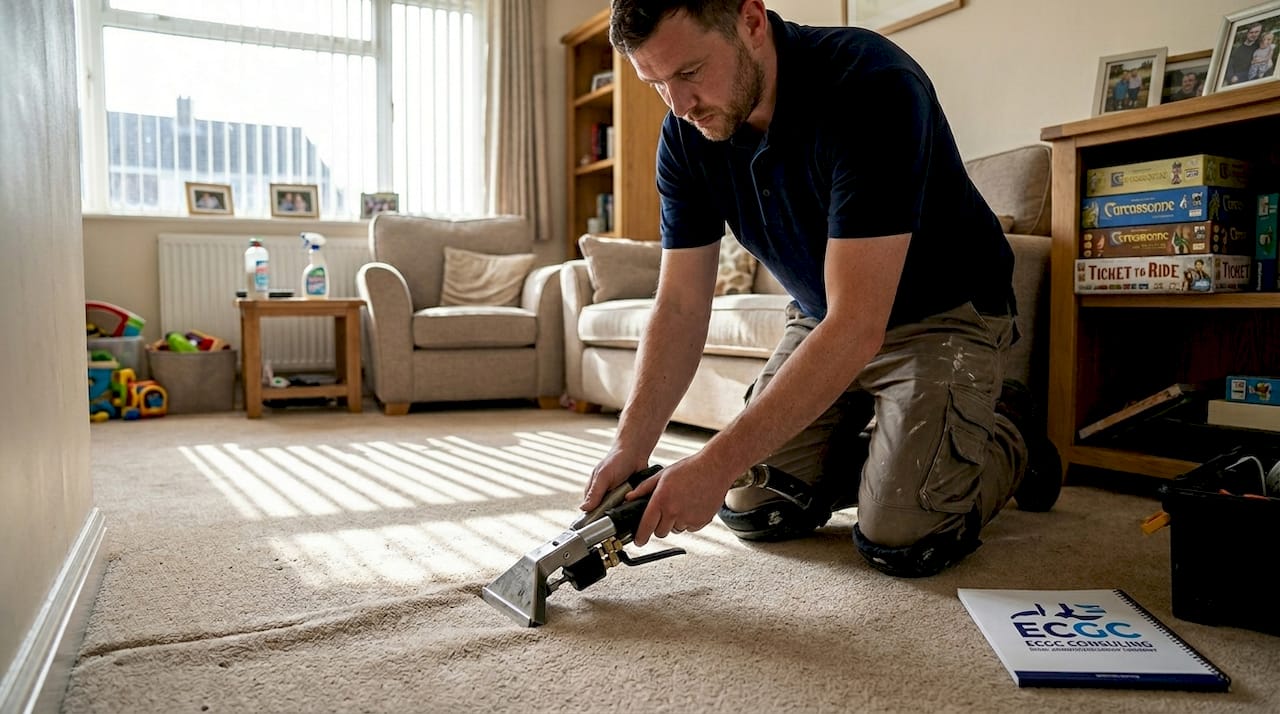
TL;DR:
- Carpet re-stretching restores a smooth, safe surface without the high cost of replacement.
- Regular re-stretching extends carpet lifespan and maintains a hygienic, attractive home environment.
- Signs for re-stretching include ripples, loose edges, and shifting carpets, ideally every 5 to 10 years.
If your carpet has developed ripples, bumps, or loose edges, you may assume it’s time for a costly replacement. That assumption costs homeowners thousands of pounds every year when a far simpler solution exists. Professional carpet re-stretching restores your carpet to its original, taut condition without the disruption or expense of fitting new flooring. In this guide, we explain exactly what the process involves, the clear benefits it delivers, when to book it, and why so many Glasgow homeowners are choosing re-stretching over replacement.
Table of Contents
- What is carpet re-stretching?
- The step-by-step re-stretching process
- Benefits of carpet re-stretching for your home
- When and how often should you re-stretch carpets?
- A fresh perspective: what most people get wrong about carpet care
- Professional re-stretching and cleaning solutions in Glasgow
- Frequently asked questions
Key Takeaways
| Point | Details |
|---|---|
| Extends carpet life | Re-stretching removes ripples and buckles, adding years to your flooring. |
| Improves home safety | Flattened carpets reduce trip hazards, making living spaces safer for all ages. |
| Cost-effective solution | Professional re-stretching is much cheaper than full carpet replacement and refreshes appearance. |
| Simple process | A standard re-stretch can be carried out in a matter of hours by skilled professionals. |
What is carpet re-stretching?
Carpet re-stretching is precisely what it sounds like: a professional process that pulls loose, wrinkled carpet back to its original tension and re-secures it firmly around the room’s edges. Over time, carpets shift. Foot traffic, temperature changes, humidity, and even heavy furniture being dragged across a room all cause the carpet to loosen from its fixings.
The result is visible ripples, raised ridges, and buckled sections that look untidy and create genuine trip hazards. Many people assume this is simply wear and tear that signals the end of a carpet’s life. In reality, the carpet fibres themselves are often in excellent condition. The problem is purely structural.
“Carpet re-stretching is the professional process of tightening loose or wrinkled wall-to-wall carpet by pulling it taut and re-securing it to perimeter tack strips using specialised tools like power stretchers and knee kickers, eliminating ripples, wrinkles, and buckles to restore a smooth, safe surface.”
The tools involved matter enormously. A power stretcher is a long, adjustable device that spans the width of a room, applying consistent tension across the entire carpet. A knee kicker is a smaller tool used to push carpet into place along edges and around corners. Without both, the result is uneven and unlikely to last.
Here are the most common causes of carpet loosening that re-stretching addresses:
- Prolonged foot traffic in hallways and living rooms
- Humidity and temperature fluctuations, particularly in older Scottish homes
- Poor original installation with insufficient tension
- Heavy furniture being moved or dragged
- Water damage or flooding that causes the backing to shift
One important misconception to clear up: re-stretching is not just for old carpets. Relatively new carpets can develop ripples within months of fitting if the original installation was rushed or the wrong technique was used. It is also worth noting that a freshly re-stretched carpet is far easier to maintain, which is why many customers combine it with a self-cleaning vs professional cleaning review to decide on the best ongoing care routine. For persistent odour issues alongside loosening, odour elimination tips can also be a useful complement to the re-stretching process.
The step-by-step re-stretching process
Building on the definition, it is important to understand exactly how the re-stretching process unfolds. Knowing what to expect helps you prepare your home and ensures you get the best possible result from your appointment.
The standard re-stretching methodology follows a clear sequence that qualified technicians follow on every job:
- Furniture removal and room inspection — All furniture is cleared from the area. The technician assesses the extent of loosening and checks for any underlying damage to the subfloor.
- Checking and replacing tack strips — The perimeter tack strips, the thin wooden strips with small nails that grip the carpet edge, are inspected. Damaged or missing strips are replaced before any stretching begins.
- Releasing carpet edges — The carpet is carefully detached from the tack strips along the walls where re-stretching is needed, allowing it to move freely.
- Power stretching across the room — The power stretcher is positioned to pull the carpet firmly and evenly from one wall to the opposite side, removing all ripples and buckles.
- Securing edges with the knee kicker — Once the main tension is set, the knee kicker is used to press the carpet firmly onto the tack strips along all edges and into corners.
- Trimming excess and finishing — Any surplus carpet is trimmed cleanly, and the edges are tucked neatly against the skirting boards for a professional finish.
| Task | Tool used |
|---|---|
| Whole-room tension | Power stretcher |
| Edges and corners | Knee kicker |
| Securing to perimeter | Tack strips |
| Trimming surplus | Carpet knife |
For DIY carpet care tips between professional visits, there are simple maintenance habits that slow down the loosening process. However, the stretching itself should always be left to professionals with the correct equipment.
Pro Tip: Clear the room of furniture before your technician arrives. This alone can reduce the time needed on the job and may lower your overall cost.
Benefits of carpet re-stretching for your home
Now that the process is clear, it is worth considering why re-stretching is recommended for homeowners and renters across Glasgow and beyond. The advantages go well beyond appearance.
Safety first. Rippled and buckled carpets are a genuine trip hazard, particularly for children and older adults. Re-stretching eliminates these raised sections immediately, making your home noticeably safer.

Restored appearance. A freshly re-stretched carpet looks as close to newly fitted as possible. The surface is smooth, the pile sits evenly, and the room simply looks better. It is one of the most cost-effective ways to refresh a room’s appearance without redecorating.
Extended carpet life. Loose carpet wears unevenly. The raised ridges take repeated foot traffic on the same spot, breaking down fibres far faster than a flat, taut surface would. Re-stretching enhances longevity by preventing uneven wear and premature replacement, making it ideal maintenance every 5 to 10 years in high-traffic areas.
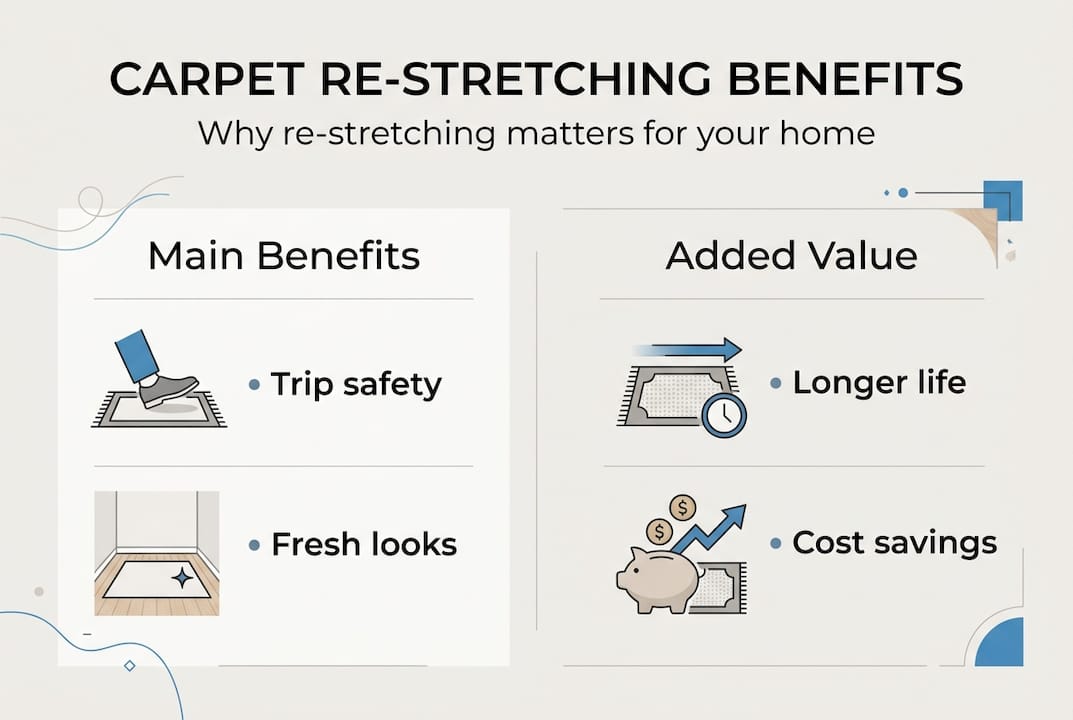
Significant cost savings. Replacing a carpet in an average living room in Glasgow can cost anywhere from £500 to over £1,500 once materials and fitting are included. Professional re-stretching is a fraction of that investment.
Better hygiene. Loose carpet creates gaps and folds where dust, allergens, and pet hair accumulate and become very difficult to remove with a standard vacuum. A taut carpet is far easier to clean thoroughly. Understanding the health and air quality benefits of well-maintained carpets is particularly important for households with allergy sufferers.
| Factor | Re-stretching | Full replacement |
|---|---|---|
| Average cost | Low to moderate | High |
| Disruption | Minimal (hours) | Significant (days) |
| Result | Restored original carpet | Brand new carpet |
| Waste generated | None | Old carpet to dispose of |
| Recommended when | Carpet is structurally sound | Carpet is beyond repair |
- Eliminates trip hazards in high-traffic areas
- Restores a smooth, even surface throughout the room
- Prevents accelerated fibre breakdown at ridges and buckles
- Saves hundreds of pounds compared to replacement
- Improves hygiene by making the carpet easier to clean properly
When and how often should you re-stretch carpets?
Understanding the signs and timing is key to getting the most out of your carpet investment. Many homeowners wait far too long, allowing minor loosening to develop into significant structural problems.
The clearest signs that your carpet needs re-stretching include:
- Visible ripples or waves across open floor areas, especially noticeable in raking light
- Raised ridges that catch underfoot or create a bumpy surface when walking
- Loose edges where the carpet has pulled away from the skirting board or threshold
- Bunching near doorways caused by repeated foot traffic compressing the carpet in one direction
- Carpet shifting when you walk across it, particularly on smooth underlay
Certain events are known triggers that often lead to re-stretching being needed sooner than expected. These include moving heavy furniture, a flood or significant water leak, a large gathering with heavy foot traffic, or discovering that the original installation was done poorly.
For scheduling, ideal maintenance is every 5 to 10 years in high-traffic areas. Rooms with lighter use, such as guest bedrooms, may go longer without needing attention. A regular check on carpet care frequency helps you plan both cleaning and re-stretching as part of a joined-up maintenance routine.
Pro Tip: Combine your re-stretching appointment with a professional deep clean. The carpet is already cleared of furniture, so it is the ideal moment to address stains, odours, and embedded dirt in one visit.
For renters, keeping carpets in good condition is directly linked to recovering your tenancy deposit. Landlords and letting agents in Glasgow increasingly inspect carpet condition carefully at checkout. Reviewing carpet care for tenants gives practical guidance on what is expected and how to avoid deductions.
A fresh perspective: what most people get wrong about carpet care
With the basics covered, it is worth stepping back for a candid look at why proactivity makes such a difference in carpet care.
After more than 15 years working with carpets across Glasgow, we have noticed a consistent pattern. The homeowners who spend the most on carpets are rarely those who buy expensive flooring. They are the ones who ignore small problems until those problems become expensive ones. A loose carpet treated as a cosmetic nuisance today becomes a frayed, damaged carpet that genuinely needs replacing in two years.
Most people treat re-stretching as a last resort. We think that is entirely the wrong approach. Re-stretching is maintenance, not repair. It belongs on the same schedule as professional cleaning, not reserved for crisis moments.
Property owners in Glasgow who prioritise consistent maintenance, including real-world carpet tips for between visits, face far less disruption and far fewer unexpected costs. The carpets in their homes last longer, look better, and contribute to a healthier indoor environment. That is not a coincidence. It is the direct result of treating carpet care as an investment rather than an afterthought.
Professional re-stretching and cleaning solutions in Glasgow
If your carpet has developed ripples, loose edges, or visible buckles, the most effective next step is to speak with a local professional who can assess and resolve the problem quickly.

At I Care Cleaning Services, we combine professional carpet re-stretching with deep cleaning to give your floors the best possible result in a single visit. Our trained, insured technicians serve Glasgow and surrounding areas including carpet cleaning in Airdrie and beyond. If you are a renter preparing for checkout, our end of tenancy carpet cleaning service is designed to meet letting agent standards. Not sure whether to clean or re-stretch? Our professional vs self-cleaning advice page helps you decide. Get in touch today for a free, no-obligation quote.
Frequently asked questions
How long does carpet re-stretching take?
A typical room can be re-stretched in one to two hours, depending on its size and how much furniture needs to be moved. The standard re-stretching process is straightforward and causes minimal disruption to your day.
Will re-stretching damage my carpet or decor?
When carried out by qualified professionals using the correct equipment, re-stretching causes no damage to your carpet or skirting boards. The tools used in re-stretching are designed specifically to apply controlled tension without tearing or distorting the carpet.
Can I move furniture back straight after re-stretching?
Yes, you can generally move furniture back immediately after re-stretching unless the carpet was also steam cleaned during the same visit, in which case you should allow adequate drying time first.
How often should landlords arrange re-stretching in rental properties?
Landlords should inspect carpets and consider re-stretching every 5 to 10 years, or when a tenancy ends, after significant foot traffic events, or following any water damage to the property.
Recommended
- Top Carpet Cleaning Tips & Tricks: DIY Methods With Professional Results — I-Care Cleaning Services
- Self-cleaning carpets vs professional Residential Carpet Cleaning — I-Care Cleaning Services
- Carpet Cleaning Livingston | Professional Carpet Cleaners Near You
- How carpet cleaning improves health and indoor air quality